Kerid Crater Geology - How the Volcanic Crater Formed
A traveler-friendly geology explainer for Kerid Crater, covering formation, rock colors, and why the lake appears blue or green.
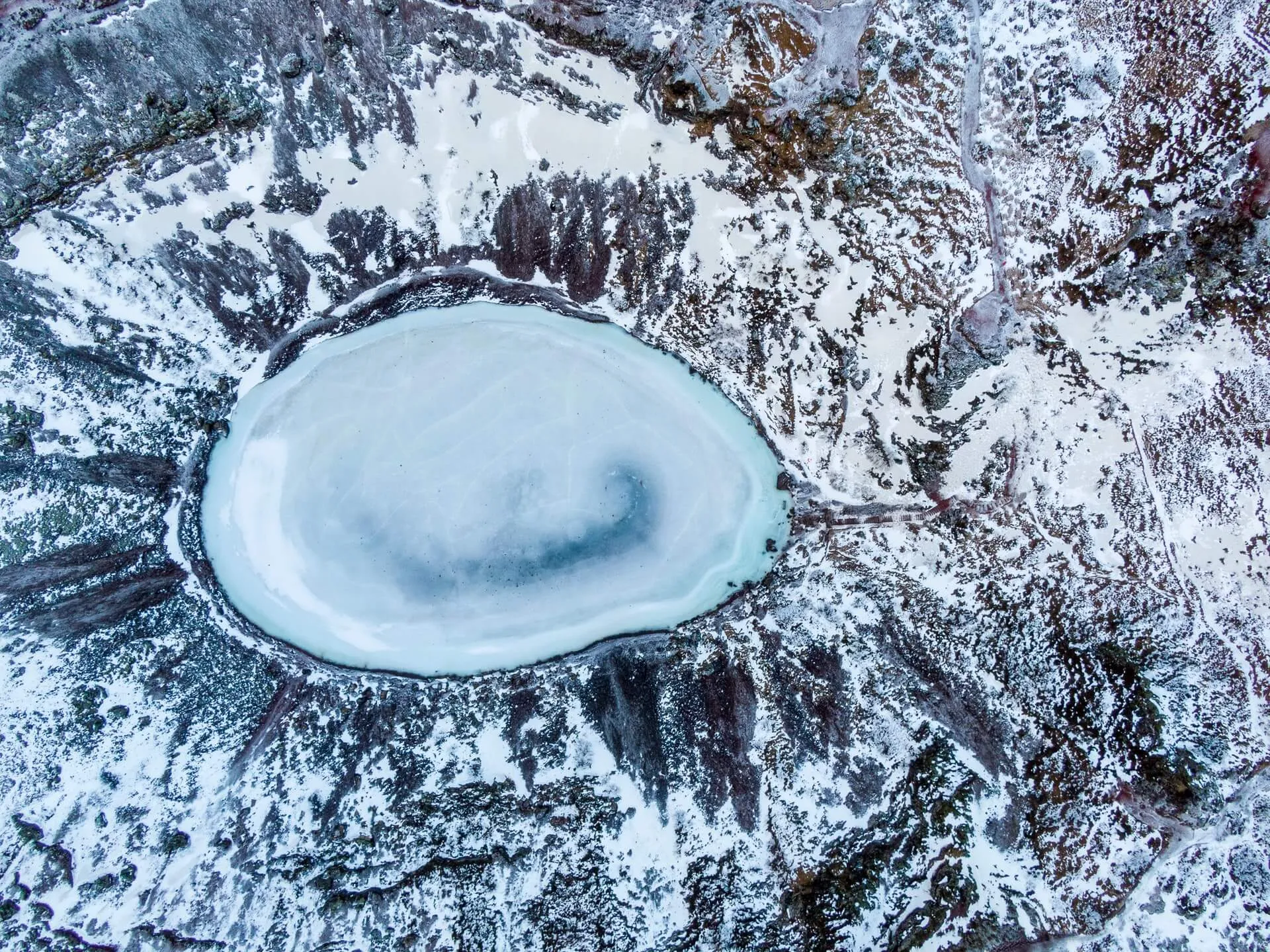
Kerid is part of Iceland's volcanic story, where magma, ash, and time reshape the surface into dramatic forms.
Geology in plain terms
Kerid is commonly described as a volcanic crater that later filled with water, producing the lake seen today. Its steep sides expose layered volcanic material and oxidation-rich tones.
What your eyes are reading
| Feature | Geological clue |
|---|---|
| Red slopes | Oxidized volcanic material |
| Dark bands | Basaltic components and ash-rich layers |
| Lake color shifts | Light angle, depth, minerals, sky reflection |
Why the crater shape matters
- The bowl-like form channels wind.
- Elevation around the rim creates changing perspective.
- Lake level and seasonal freeze-thaw alter visual texture.
Field observation game
- Compare slope color in sun vs cloud.
- Observe grain size differences along path cuts.
- Notice how water tone changes as you move around the rim.
Myth vs reality
Myth: the lake is always the same bright blue.
Reality: color is dynamic and depends on weather, season, and angle.
Bottom line
Kerid is not just a scenic stop; it is a compact outdoor geology lesson where volcanic history is visible from almost every viewpoint.
Về tác giả

Iceland Travel Desk
Cam nang nay duoc tao cho nhung du khach muon hieu Kerid sau hon mot tam anh tren mang xa hoi, voi loi khuyen thuc te, boi canh dia chat va cac goi y lap ke hoach sat voi dieu kien Iceland.
Tags
Comments (0)
Loading comments...